
Bishop Floyd and Anna Bell Douglas: A Historical Profile
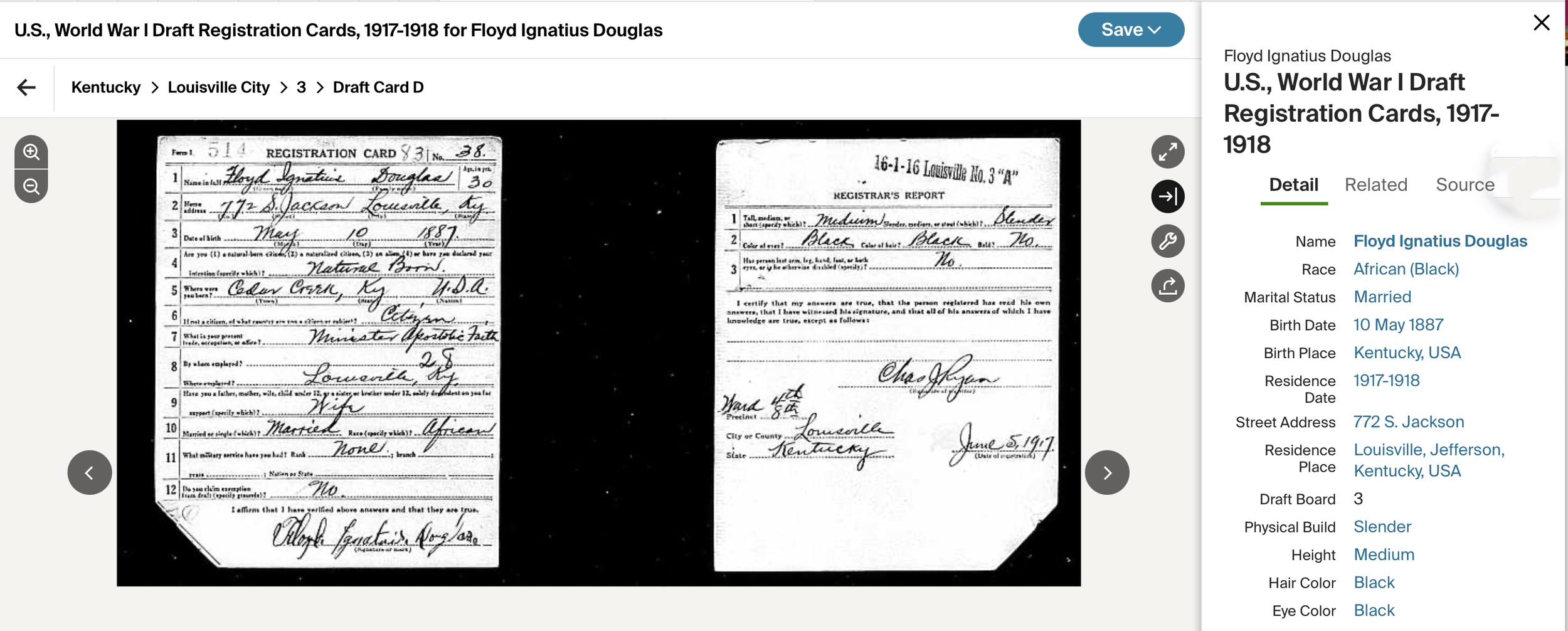
Floyd Ignatius Douglas was born on May 10, 1887, in Nelson County, Kentucky, the son of Bettie Troutman and Charles Ignatius Douglas (1863–1897). His grandparents were Ignatius A. Douglas (1827–1866) and Ara Ann Rapier Douglas (1828–1902). His great-grandparents were Nace Douglas (1800–1879) and Henrietta Dorsey Balm (1805–?), often referred to as “Henny.”
Henrietta’s surname appears in historical records as Dorsey, Reed, and Reid. It is known that she was enslaved for at least part of her life by William Reid. On February 3, 1868, Nace Douglas and Henrietta Dorsey appeared before a Nelson County clerk and declared that they had lived together as husband and wife for the previous 29 years.
Source: Nelson County, KY, Declaration of Marriage of Negroes and Mulattoes, FHL Microfilm 1,842,919.
Bishop Douglas’ father was one of seven siblings, and his grandfather had two siblings.
On August 24, 1910, Floyd Ignatius Douglas married Anna Bell Claxton Davis (age 23) in Jeffersonville, Indiana.
Brother Douglas joined the Pentecostal Assemblies of the World (P.A.W.) and attained the title of Elder in 1912.
A notice appearing on April 2, 1915, in The Courier-Journal (Louisville, KY, page 4), documented properties in the Smoketown area.
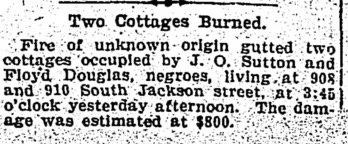
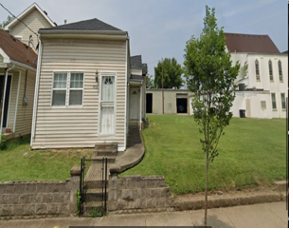
The empty lot behind the tree had once held a home belonging to J. O. Sutton that was not rebuilt, while the house to the left was Bishop Douglas’ residence, which was rebuilt. These homes were known as shotgun houses (or cottages) — narrow rectangular dwellings typically no more than 12 feet (3.5 m) wide, with rooms arranged one behind the other and doors at each end. Shotgun houses were among the most common housing styles from the end of the Civil War through the 1920s.
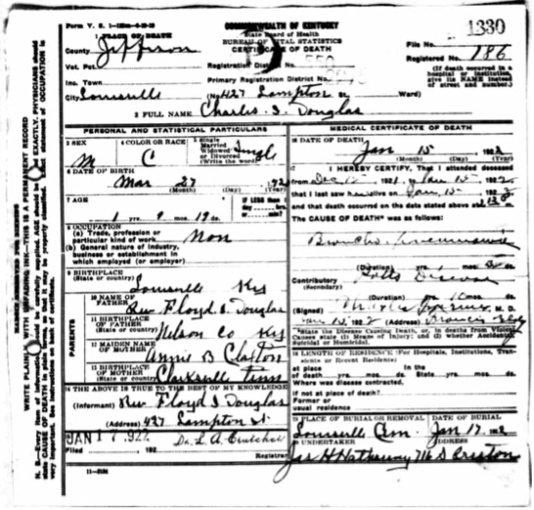
On March 27, 1920, Bishop Floyd I. Douglas (age 32) and First Lady Anna B. Douglas (age 32) welcomed a son, Charles S. Douglas, in Louisville, Kentucky. Charles died on January 15, 1922. According to Mother Addie Davis of Seattle, WA, in a personal conversation with Historian, Suffragan Bishop LaMonte McNeese, her mother stated that the child was accidentally dropped and later died from bronchial complications and pneumonia. (October 11, 2025)
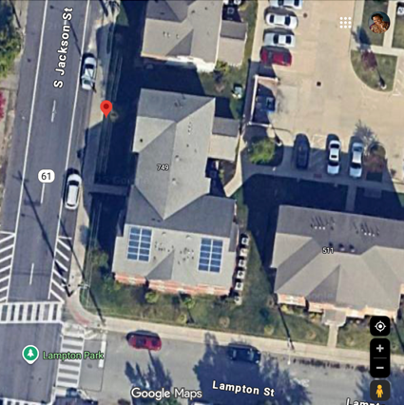
Elder Douglas later leased a building at the corner of Jackson and Lampton Streets in Louisville, Kentucky, where the council added a business meeting to the order of service. Elder Alexander R. Schooler and Bishop G. T. Haywood presided over this first meeting, and Elder Douglas was elected the first chairman.
In 1924, Elder Douglas held the title of general elder and was later elected to District Elder. This promotion required extensive travel while he technically remained pastor of Greater Bethel, with ministry trips across the country, including extended time in California.
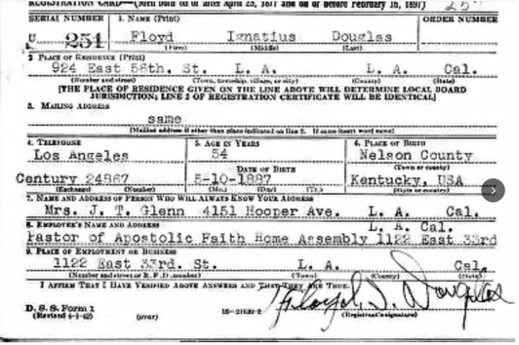
When Elder W. M. Carson, pastor of the Apostolic Faith Home Assembly at 1122 E. 33rd Street, Los Angeles, became ill, he requested that Elder Douglas assume full leadership of the church and its membership. In 1927, Elder Douglas placed the Louisville church back under the care of Bishop G. T. Haywood as he took over leadership of the California assembly.
In 1934, Pastor Douglas was elevated from District Elder to Bishop and appointed Senior Bishop due to organizational changes within the P.A.W., supported by credentials dating back to October 12, 1912.
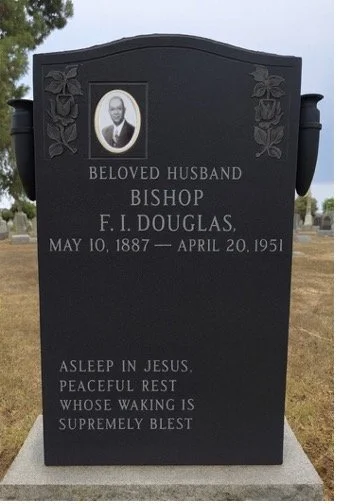
Bishop Floyd Ignatius Douglas passed away on April 20, 1951, in Los Angeles, California, at the age of 63.
First Lady Anna Bell Douglas
Anna Bell Claxton was born on May 14, 1887, in Clarksville, Tennessee, to Lucy January (1869–1953) and Alexander Claxton. Lucy later married Charles H. Davis (1861–1937) in 1889, and Anna Bell adopted the Davis surname at the age of two.
Anna Bell’s grandmother was Rebecca January (1856–1942). Charles H. Davis’ parents were Thomas Davis (1825–1900) and Betsey Palmer Davis (1826–1900).
First Lady Anna Bell Davis Douglas was among the first to host church services, along with Sister Viola Beeler and Sister Theresa Coffman, who opened her garage for Sunday worship.
Anna Bell Claxton Davis Douglas died in 1941 in Los Angeles, California, at the age of 54.
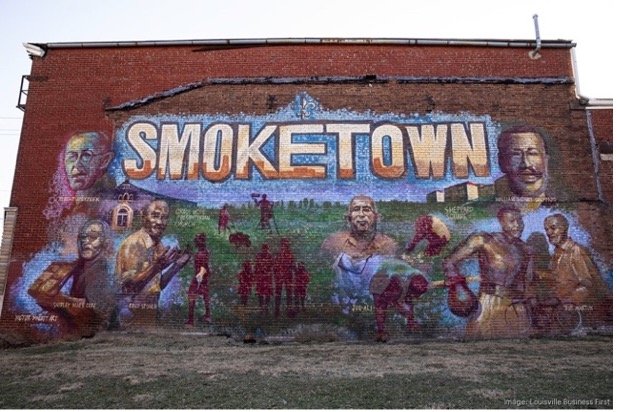
Smoketown Context
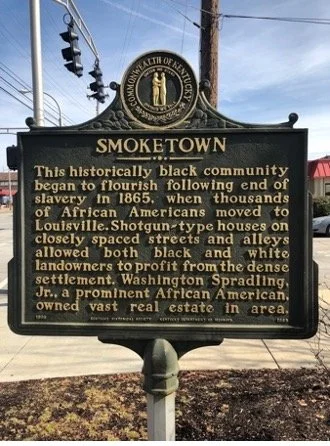
The Smoketown area of Louisville originated near smoke-producing factories and developed into a historically Black neighborhood following the Civil War. Bishop Douglas lived in this area in a shotgun house. (Smoketown communities also exist in Pennsylvania, though this account refers specifically to Louisville, Kentucky.)
A mural honoring Smoketown history was created by artist Victor Sweatt at the corner of Lampton and South Hancock Streets.